Source: komunal.hr
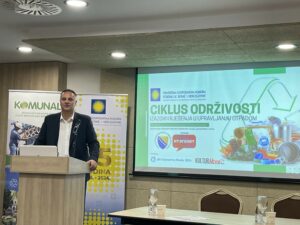
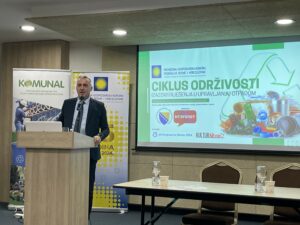
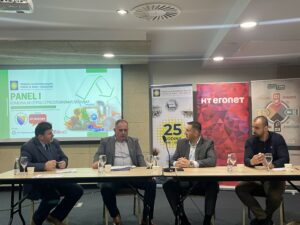
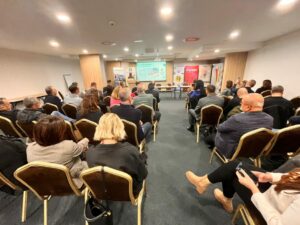
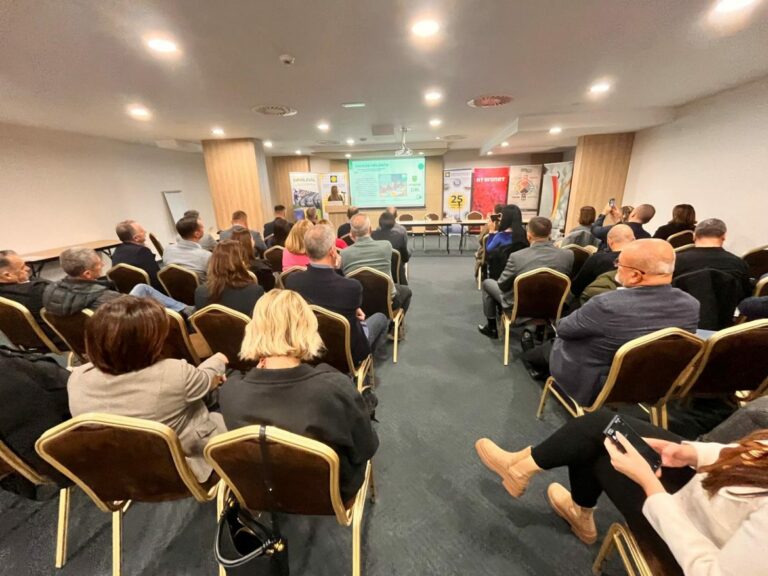
The Chamber of Economy of the Federation of Bosnia and Herzegovina, in cooperation with the Federal Ministry of Development, Entrepreneurship and Crafts, is organizing a two-day conference titled CYCLE OF SUSTAINABILITY: Challenges and Solutions in Waste Management.
The event began today, 12.12., and will continue tomorrow, 13.12.2024, at Hotel Marea in Neum.
This conference represents a unique opportunity for the exchange of knowledge and experience, as well as for presenting innovative solutions in the field of waste management, with solutions from Bosnia and Herzegovina and neighboring Croatia being presented.
The emphasis is on global challenges and local responses, based on the exchange of best practices, whether in the area of bio-waste, energy fuels from waste (RDF), or mixed municipal waste, which still largely ends up in landfills.
STATEMENTS:
dr.sc. Marko Šantić, President of the Chamber of Economy of the Federation of Bosnia and Herzegovina:
The Chamber connects the economy and creates new knowledge about waste management in Bosnia and Herzegovina and throughout the entire SEE region. We need the experience of other EU member states, so Neum is the right place to exchange this specific knowledge about municipal waste, and we continue with a series of thematic conferences.
Mirsad Jašarspahić, Vice President of the Chamber of Economy of the Federation of Bosnia and Herzegovina
We are pleased because leading waste experts and utility companies from the Federation of Bosnia and Herzegovina, as well as from neighboring Croatia, have gathered at this conference, and important discussions await us. Every individual in Bosnia and Herzegovina makes their own key contribution to waste management. We need to bring EU sustainability policies closer to our companies, which are otherwise oriented toward exports to the EU market, so they also need environmental certificates.
Marijan Kavran, editor-in-chief of the magazine KOMUNAL (Zagreb)
Bio-waste is a major problem because green waste and kitchen green waste cannot be disposed of in any other way except by composting, either on site or in specially built municipal composting facilities. Large plants also produce biogas. For municipal waste, as a final measure, waste can be turned into energy by incineration or co-incineration in biomass power plants, as developed EU countries do, especially in Scandinavia. We need to continue raising awareness and educating the population about preventing the generation of municipal, and especially biodegradable, waste.
More information about the waste market in Bosnia and Herzegovina can be obtained by email at: s.muslic@kfbih.com