
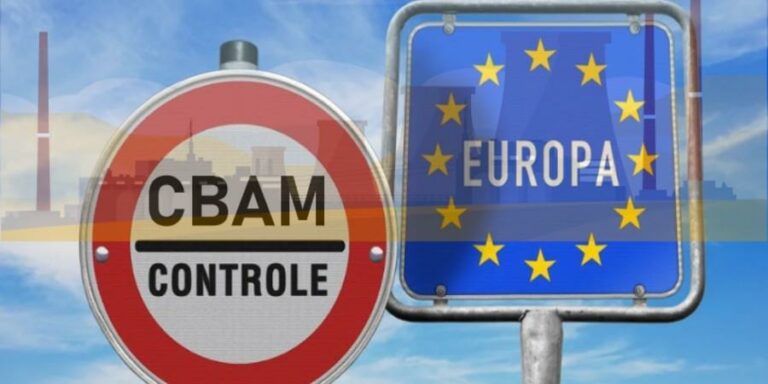
Source: Akta.ba
Due to the Government of the RS decision, all exporters in BiH will pay the CBAM fee into the EU budget, which puts them at a disadvantage and takes away their competitiveness.
Akta.ba learns that all export companies from BiH will pay the CBAM fee because the Government of the RS did not accept the offered Roadmap for establishing the MRV System and EU ETS model in Bosnia and Herzegovina
Namely, the Chamber of Commerce of the Federation of BiH has well-founded information that at the session of the Government of the RS held on February 6, a negative opinion was given on the Roadmap for establishing the MRV and EU ETS model in BiH.
The Government of the RS adopted a conclusion at the session in question by which it gave a negative opinion on this Roadmap, thereby stopping the adoption of the said Roadmap by the Council of Ministers of BiH, and the deadline was the end of 2024.
“This means that due to the negative opinion of the Government of the RS, the EU ETS model will not be able to be established in BiH by the end of 2025, which means that BiH exporters will have to pay the CBAM fee into the EU budget from 01.01.2026,” says Mirsad Jašarspahić, vice president of the Chamber of Commerce of the Federation of BiH, for Akta.ba.
TAX ON EXPORTS
Namely, CBAM as an EU mechanism is actually a tax that exporters pay in order to prevent “carbon leakage” by moving production to countries with more lenient environmental standards.
CBAM covers products from the sectors of cement, aluminum, fertilizers, electricity generation, iron and steel, and hydrogen.
Officially, as of January 1, 2026, all exporters will be required to purchase CBAM certificates to cover CO₂ emissions.
It is important to note that export companies will pay the CBAM fee because the Government of the RS did not accept the offered roadmap plan prepared by the EU.
“This means that due to this decision of the Government of the RS, companies from the Federation of BiH and the Brčko District will also pay the fee, even though they gave a positive opinion on this Roadmap,” says Jašarspahić.
THERE IS NO PARTIAL ADOPTION
Jašarspahić emphasizes that there is no partial adoption of the EU ETS system.
“What is clear is that one system must be adopted at the state level, not the entity level, meaning it cannot be partial and as such will affect exporters throughout BiH,” he explains. He adds that this is not a political issue, but a purely economic one that will affect all companies in BiH that fall under the relevant categories.
CBAM is designed to function in parallel with the EU emissions trading system, and the Council has opted for greater centralization of CBAM management where that makes sense and contributes to greater efficiency.
THE FBiH ADVOCATES EXEMPTION FROM THE CBAM MECHANISM
Production from the sector covered by CBAM in 2023 accounts for about 15 percent of total BiH exports to the EU.
As BiH still does not have an Emissions Trading System (ETS) or alternative mechanisms for reducing CO₂ emissions, such obstruction increases the costs of importing BiH products into the EU, reduces their competitiveness, and in the long term jeopardizes access to the EU market.
The Federation of BiH, because of its companies and the impact of the CBAM mechanism, strongly advocates exemption from the application of the CBAM mechanism.
Namely, the Ministry of Foreign Trade and Economic Relations of BiH, in cooperation with the Energy Community Secretariat, has in the past period prepared a Draft Roadmap for introducing a carbon pricing and emissions trading scheme in BiH, which was accepted by the Working Group for drafting the NECP.
One of the basic prerequisites for establishing ETS in BiH is the establishment of an MRV system, which implies the transposition and implementation of the Regulation on the Governance of the Energy Union and Climate Action (2018/1999), as well as the so-called MRV package (Regulation 2018/2066 on monitoring and reporting greenhouse gas emissions (MRR) and Regulation (EU) 2018/2067 on verification of data and accreditation of verifiers (AVR)). The MRV package should be implemented as a prerequisite for the later emissions trading permit system.
By decision of the Minister of Foreign Trade and Economic Relations of BiH, in May 2024 a Working Group was formed for the establishment of the Emissions Trading System and the Monitoring, Reporting and Verification System. The task of the working group was to prepare a Roadmap for establishing the EU ETS MRVA system (Monitoring, Reporting, Verification and Accreditation System for the Emissions Trading System), for establishing ETS, and for establishing the MRV system for the NECP (needed for preparing the Report on progress in NECP implementation).
The document will define the competent institutions for establishing the system and provide an overview of the necessary steps to enable the process of transposing EU regulations and implementing the MRVA system in BiH, since this is a necessary prerequisite for the efficient establishment of the ETS system in BiH.
After the Working Group prepared the Roadmap, its adoption by the Council of Ministers of BiH was planned by the end of 2024, which has not been done to date.
Before the adoption of the Roadmap, prepared within the EU4Energy project (“Technical assistance to the energy sector of Bosnia and Herzegovina”), the document “Roadmap for establishing the MRV system and for establishing ETS in Bosnia and Herzegovina” and “Guide for Integrated Energy and Climate Reporting” was submitted to the entity line ministries and competent bodies for review and approval.
DIRECT OBSTRUCTION BY THE GOVERNMENT OF THE RS
Although the competent bodies and ministries, representatives of both entities and the Brčko District of BiH participated in the entire drafting process, the Government of the RS entity, at its 104th session held on 6.2.2025, adopted a Conclusion in which it did not agree that the said documents be forwarded for consideration and adoption to the Council of Ministers of BiH and does not accept the drafting and adoption of a Decision of the Council of Ministers of BiH by which direct transposition of the EU acquis is carried out, in the field of energy and climate change at the level of BiH, and creates the basis for adopting primary and secondary regulations in the field of climate change and energy at the level of BiH.
“It is very important to note that, in this process as in many others aimed at improving BiH legislation and bringing it closer to the EU acquis, one of the key priorities of the Government of the FBiH is to support the work of the said Working Group and to urgently adopt the necessary laws so that a functional EU ETS system can be established at the state level. If the Conclusion of the RS entity authorities remains unchanged, it will represent an obstacle to the adoption of the Roadmap at the level of the Council of Ministers of BiH, and from 1.1.2026, carbon taxation fees on products exported from BiH will be paid into the EU budget instead of the BiH budget, which would later be distributed to exporting companies with the aim of improving competitiveness, implementing energy efficiency measures, and ultimately reducing CO2 emissions in production,” Jašarspahić explained.
In the conclusion of the 1st session, it states “The Government of the Republic of Srpska has reviewed the Information on documents prepared within the EU4Energy project (…) and accepts it, but in conclusion 2 it states that ‘The Government of the Republic of Srpska does not agree that the documents from point 1 of this conclusion be forwarded for consideration and adoption to the Council of Ministers of BiH, because the proposals (…) are not in accordance with the constitutional and legal competences of the Republic of Srpska and BiH.'”
A key part is Conclusion 3, which clearly states that “The Government of the Republic of Srpska does not accept the drafting and adoption of a Decision of the Council of Ministers of BiH by which direct transposition of the EU acquis is carried out, in the field of energy and climate change at the level of BiH, and creates the basis for adopting primary and secondary legal regulations in the field of climate change and energy at the level of BiH, because this is within the exclusive competence of the institutions of the Republic of Srpska, the Federation of BiH and the Brčko District of BiH.”
It is stated that the Government of the Republic of Srpska takes the position that the establishment of the Monitoring, Reporting and Verification System MRV is within the exclusive competence of the institutions of the Republic of Srpska, the Federation of BiH and the Brčko District of BiH and is a matter regulated within the legislative framework on climate change at the entity level, and that harmonization of the Monitoring, Reporting and Verification System MRV in BiH may be the subject of a Decision at the level of BiH, without creating a legal basis for transposing the EU acquis into a Decision at the level of BiH and adopting by-laws at the level of BiH.
“The Government of the Republic of Srpska does not agree with the proposal that the preparation of the Greenhouse Gas Inventory (SNS Inventory) for BiH, for reporting purposes, be carried out by the Ministry of Foreign Trade and Economic Relations of BiH/the Agency for Statistics of BiH, because the establishment, operation and development of the Greenhouse Gas Inventory System (SNS Inventory) in BiH is legally regulated by the legislative framework at the entity level,” it is stated in conclusion 6.
In conclusion 10 it states “The Government of the Republic of Srpska takes the position that the establishment and operation of the EU ETS System in BiH must be aligned with the unified positions of the competent institutions of the Republic of Srpska, regarding the establishment of the European Union emissions trading system EU ETS.”
The motives behind this decision of the Government of the RS are difficult to understand, given that it equally obstructs exporters from that entity.
We remind you that at the held round table on the topic “Carbon Border Adjustment Mechanisms (CBAM) and improving the competitiveness of BiH exporters”, organized by the American Chamber of Commerce in BiH/AmCham BiH, the status of CBAM implementation in BiH was discussed precisely.
By analyzing the status and impact of CBAM and ETS on the BiH economy, the aim is to define possible steps to reduce the negative impact of this EU practice on BiH exporters, which is impossible without the involvement of BiH authorities and simplification of procedures.

