The second day of SECW dedicated to the economic benefits of switching to renewable energy
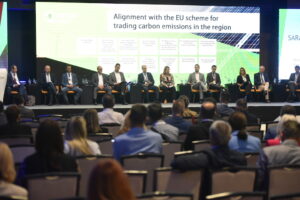
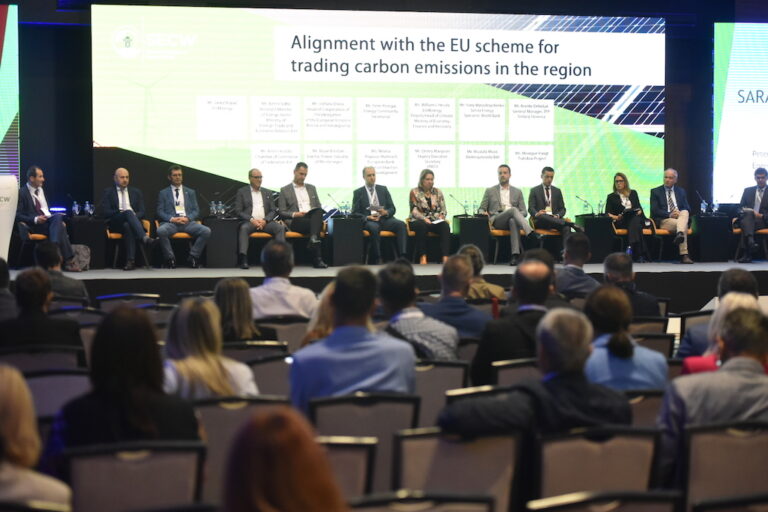
(Sarajevo, 27 September 2023) During the second day of the “Sarajevo Energy and Climate Week”, the economic aspect of the energy transition was discussed, along with the benefits and possible financial losses if BiH does not introduce a carbon dioxide emissions trading system (ETS). Emissions trading is a market-based approach to reducing carbon dioxide emissions. The concept is also known as “cap and trade” (CAT) or emissions trading scheme (ETS). Trading emissions for CO2 and other greenhouse gases has been introduced in the European Union and other countries as a key tool for mitigating climate change.
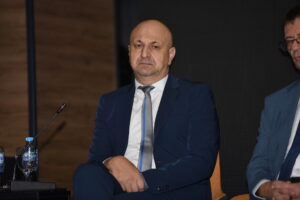
“Our goal is to adopt the practice of using these mechanisms in BiH. The activities are supported by all stakeholders in BiH, but we still do not have an official political decision. We are aware of the importance of what we lose if we do not adopt the ETS model, both in terms of financial losses and environmental consequences, which is why it is important that we adopt these provisions as soon as possible,” said Admir Softić, Assistant Minister for Energy at the Ministry of Foreign Trade and Economic Relations of BiH.
By adopting this system, our country can increase the production of decarbonized energy by about 40% in just ten years.
“We in the EU have great ambitions for the energy transition and in that direction we support BiH. We are here to help the countries of the Balkans move in this direction. Market coupling is a key item for the sale of electricity and is a basic condition for trading clean energy in BiH. The EU will not make an exception for BiH, you are a middle-income country and there is no reason why you cannot implement this”, emphasized Stefano Ellero, Head of Cooperation at the EU Delegation to BiH, adding that Bosnia and Herzegovina has great potential for energy production from renewable sources.
The World Bank and the European Investment Bank directly financially support the green policy of the European Union in the transition process toward renewable energy sources.
“At the end of 2022, the EU announced an energy support package worth one billion euros, and so far we have paid out around 240 million euros for energy projects in the Western Balkans. This support package is exclusively intended for projects for the production of renewable energy sources, with the aim of strengthening the impact of the EU green transition policy,” said Sandrine Fiscia from the European Investment Bank.
It was emphasized that private companies cannot be the sole bearers of the energy transition, but that green policy must be recognized at all state levels through budgets and transition plans.
“In the context of the economic investment plan, the EU priorities remain the same as at the beginning. BiH is currently at a key moment of energy transition, and in addition to using foreign investments, it is necessary to work on planning local budgets for implementing the green agenda in Bosnia and Herzegovina”, said Tarik Hubana, from the EU Delegation in Bosnia and Herzegovina.
Bosnia and Herzegovina needs around 14 billion KM for a complete energy transition by 2030. Recently, Bosnia and Herzegovina’s sovereign credit rating was upgraded, given that public debt is still relatively low, which enables the attraction of foreign investments and credit support packages for the development of renewable energy projects.
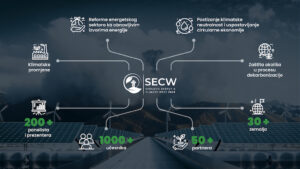
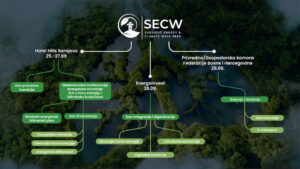
The Sarajevo Energy and Climate Week is programmatically and financially supported by partner countries Czechia and Norway, the British and Swedish embassies in BiH, the World Energy Council, the Government of the United States USAID EPA Project, UNDP, GIZ, UNECE, IRENA, EBRD, the World Bank, the EU4Energy project, SEI, PIN, FIC, EPBiH, EPHZHB, Procredit Bank, NLB Bank, Cement plants Lukavac and Kakanj, GGF, KFW, PRANA, GS-Tvornica Mašina Travnik, RCB Nanotechnologies, Thermoflux, Messer, Porsche Sarajevo, Mega Tel, Hotel Hills, GEIA, People in Need, and the Faculty of Economics, Mechanical Engineering and Natural Sciences of the University of Sarajevo.