
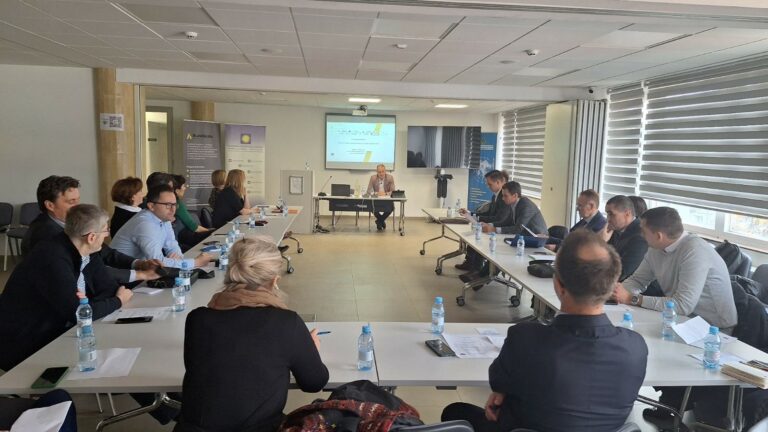



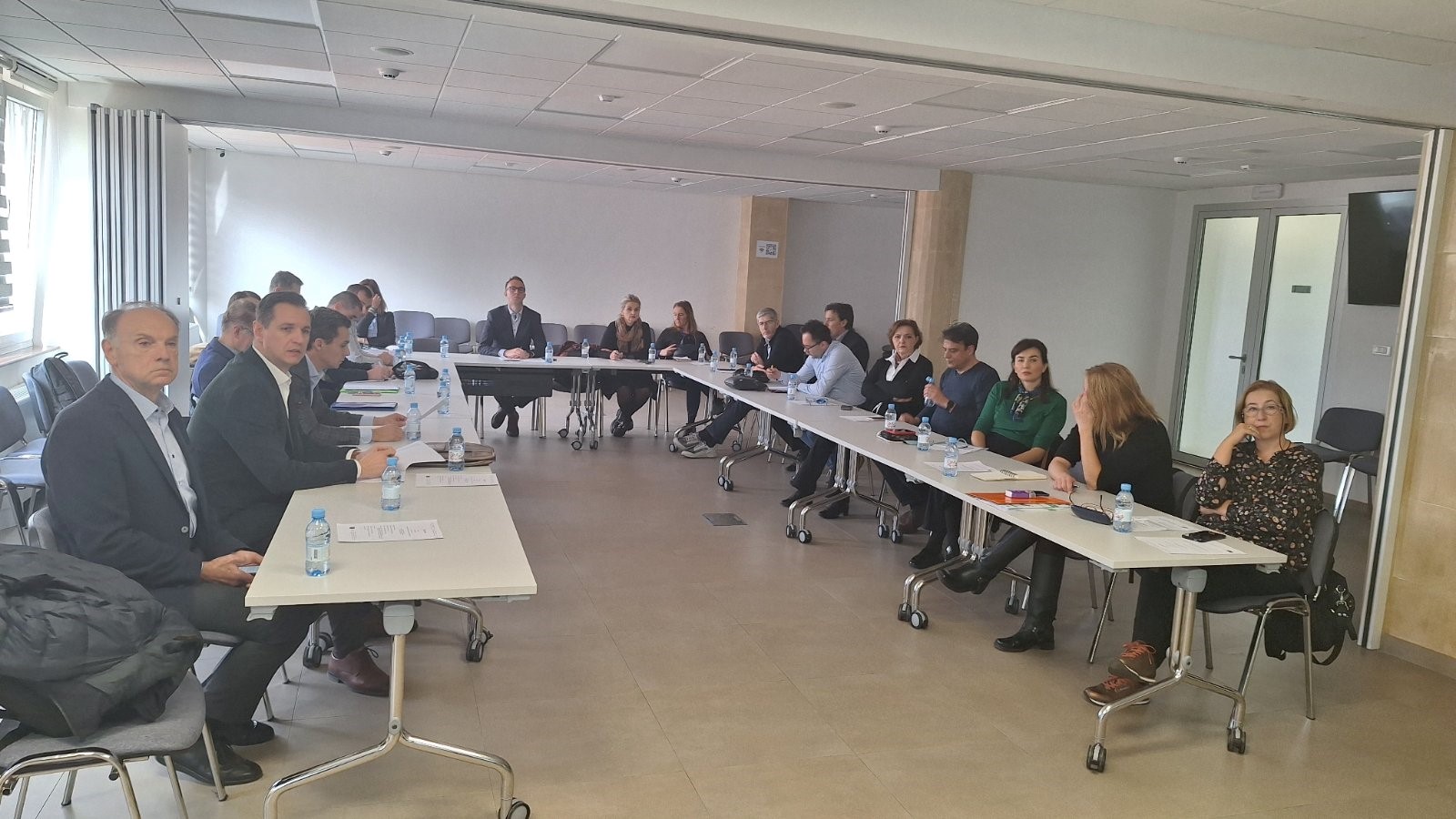
In Sarajevo on 11 November 2024, organized by the Chamber of Commerce of the Federation of Bosnia and Herzegovina within the BuildSkills Academy Project, the 1st national round table on the topic of verification of the strategic alignment of the BuiltEnrichedSkills (BESM) methodology was held.
The BuildSkills Academy project, funded under the Erasmus+ program, is making significant steps in transforming vocational education and training (VET) for the construction sector. This initiative aims to equip the sector with the essential skills needed to navigate the green and digital transformation in Europe.
A key component of the project is the Built Enriched Skills Methodology (BESM), developed to guide vocational education providers in improving their courses. The BESM methodology follows a structured three-step process: self-assessment, which evaluates the current course content; gap identification, which generates a report highlighting missing skills; and enrichment, which provides guidance and best practices for updating course content, teaching methods and assessment.
To achieve this goal, round tables were held in six countries: Bulgaria (29 October), Cyprus (29 October), Lithuania (7 November), Italy (8 November), Bosnia and Herzegovina (11 November) and Greece (11–15 November). These discussions provided an opportunity for vocational education providers, industry representatives and sector experts to assess the relevance of BESM in meeting market demands for sustainability and digitalization skills. Insights from these discussions were instrumental in refining the methodology, ensuring that it is aligned with national vocational education and training policies and encourages cooperation between education providers and industry stakeholders. At the heart of the BuildSkills Academy project lies the ambition to define and integrate core skills
for the future of the construction sector.
Through the development of a robust certification framework, updating vocational education and training curricula and piloting innovative training programs, the project seeks to bridge certification gaps in EU member states while also increasing the role of vocational training in shaping sector progress. The round table discussions were an essential component of this effort, providing valuable insights that will guide the refinement of the BESM methodology and ensure its continued relevance.
The round tables highlighted common challenges and unique circumstances related to workforce development in the construction sector, especially regarding green and digital skills. A common thread throughout all discussions was the need to update curricula and training programs to reflect the growing demands of the sector. There was widespread recognition of the need to integrate modern technologies, green competencies and digital tools into VET offerings.
Bosnia and Herzegovina highlighted the need for stronger frameworks at the national level to support VET initiatives. Although the BESM methodology was considered relevant, its application was limited by the lack of a robust education system for adults and national frameworks for qualifications in professions such as architecture and construction. The focus was on meeting industry needs through clearer metrics and better cooperation with industry representatives.
Bosnia and Herzegovina in the Project is represented by the Chamber of Commerce of the Federation of Bosnia and Herzegovina together with the Center for Economic, Technological and Environmental Development. Sarajevo CETEOR, as well as associated partners in the project, participate: UKI BIH, ENERGIS, REIC and SERDA.
At the 1st national round table, in addition to the Chamber of Commerce of the Federation of BiH, Ceteor and Serda, representatives of relevant ministries, the academic community and companies took part.
The conclusions gathered during these discussions will play a key role in refining the BuildEnrichedSkills methodology, ensuring that it meets the evolving needs of the construction sector while promoting cooperation between education providers, industry participants and policymakers.
Through these efforts, the BuildSkills Academy project is paving the way for a greener, more innovative Europe, equipped with the skills needed to thrive in an increasingly digital and sustainable world.

