
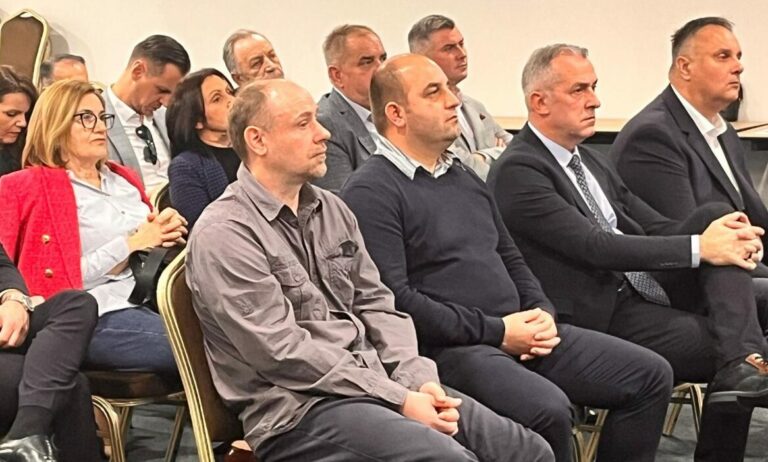
Source: hms.ba
The second day of the conference “Cycle of Sustainability: Challenges and Solutions in Waste Management”, organized by the Chamber of Commerce of the Federation of Bosnia and Herzegovina in cooperation with the Federal Ministry of Development, Entrepreneurship and Crafts, brought important conclusions in the areas of recycling, illegal dumps and citizen education, reports the Croatian Media Service.
Conclusions of the second day of the conference
The philosophy of recycling – The need to develop sustainable recycling systems was emphasized, which implies greater involvement of all sectors of society, from local communities to industry. All participants agreed that the key challenge is reducing the waste that ends up in landfills, while increasing recycling through the implementation of new technologies and better infrastructure solutions.
Illegal dumps – The problem of illegal dumps remains one of the biggest environmental challenges, and proposals for stronger control and remediation of existing dumps were adopted. It was emphasized that it is important to involve local communities in activities to clean up and prevent the creation of illegal dumps.
Citizen education – All participants agreed that education is key to reducing waste generation and raising citizens’ awareness of the importance of recycling and proper waste disposal. Efforts need to be focused on educating people about waste separation already in households, as well as on broader application of environmental certificates among entrepreneurs.
Support for legislation and integration with EU standards – It was concluded that it is necessary to improve the legislative framework in order to align it with EU standards in the field of waste management. This will enable better integration of the BiH market into the European environmental system and contribute to sustainable development.
Innovative solutions for municipal waste – Developed EU countries already apply advanced technologies for the energy valorization of waste, such as biogas production and waste incineration in biomass power plants. In BiH, it is necessary to develop similar projects that would enable reducing the amount of waste in landfills and turning it into useful energy.
The conference provided a platform for the exchange of knowledge and experience, thereby laying the foundation for further steps in improving the waste management system in BiH and the region.
Šantić: We need the experience of EU member states
The President of the Chamber of Commerce of the Federation of Bosnia and Herzegovina, Dr. Marko Šantić, said that the Chamber connects the economy and creates new knowledge about waste management in BiH and throughout the entire SEE region.
-We need the experience of other EU member states, therefore Neum is the right place for exchanging this specific knowledge about municipal waste and we are continuing with a series of thematic conferences, Šantić said.
Jašarspahić: Every individual contributes
The Vice President of the Chamber of Commerce of the Federation of Bosnia and Herzegovina, Mirsad Jašarspahić, expressed satisfaction that leading waste experts and utility companies from the FBiH, as well as from neighboring Croatia, gathered at this conference.
-Every individual in BiH makes their own key contribution to waste management. We need to bring EU sustainability policies closer to our companies, which are otherwise oriented toward exports to the EU market, so they also need environmental certificates, Jašarspahić emphasized.
Kavran: Continue to raise awareness and educate the population
Marijan Kavran, editor-in-chief of the magazine “Komunal” from Zagreb, pointed out that bio-waste is a major problem, because green waste and kitchen green waste cannot be disposed of in any other way except by composting, either on site or in specially built municipal composting facilities.
-Large plants also produce biogas. In the case of municipal waste, as a last resort, waste can be turned into energy by incineration or co-incineration in biomass power plants, as developed EU countries do, especially in Scandinavia. It is necessary to continue raising awareness and continue educating the population about preventing the generation of municipal, and especially biodegradable, waste, Kavran believes./HMS/

