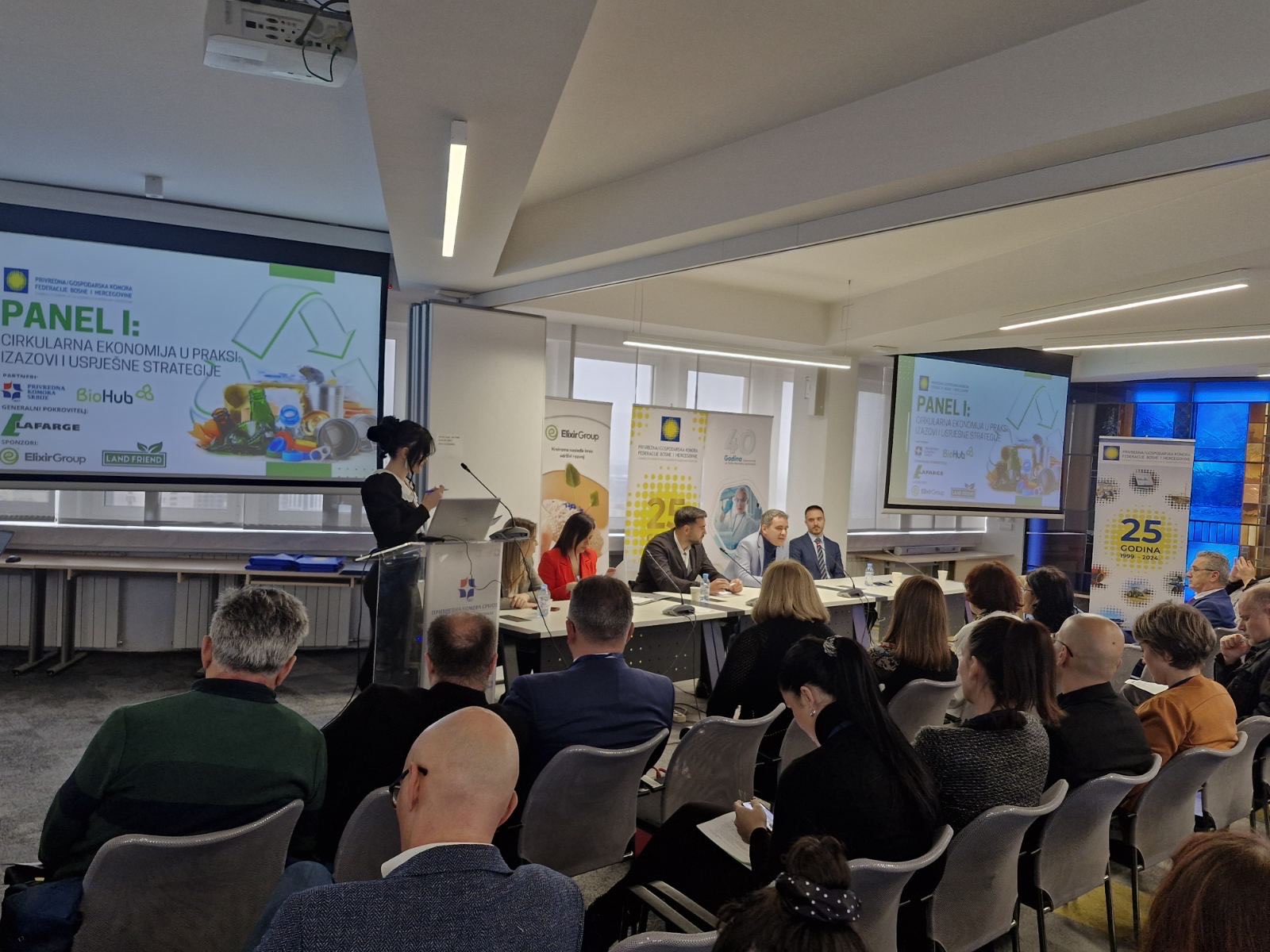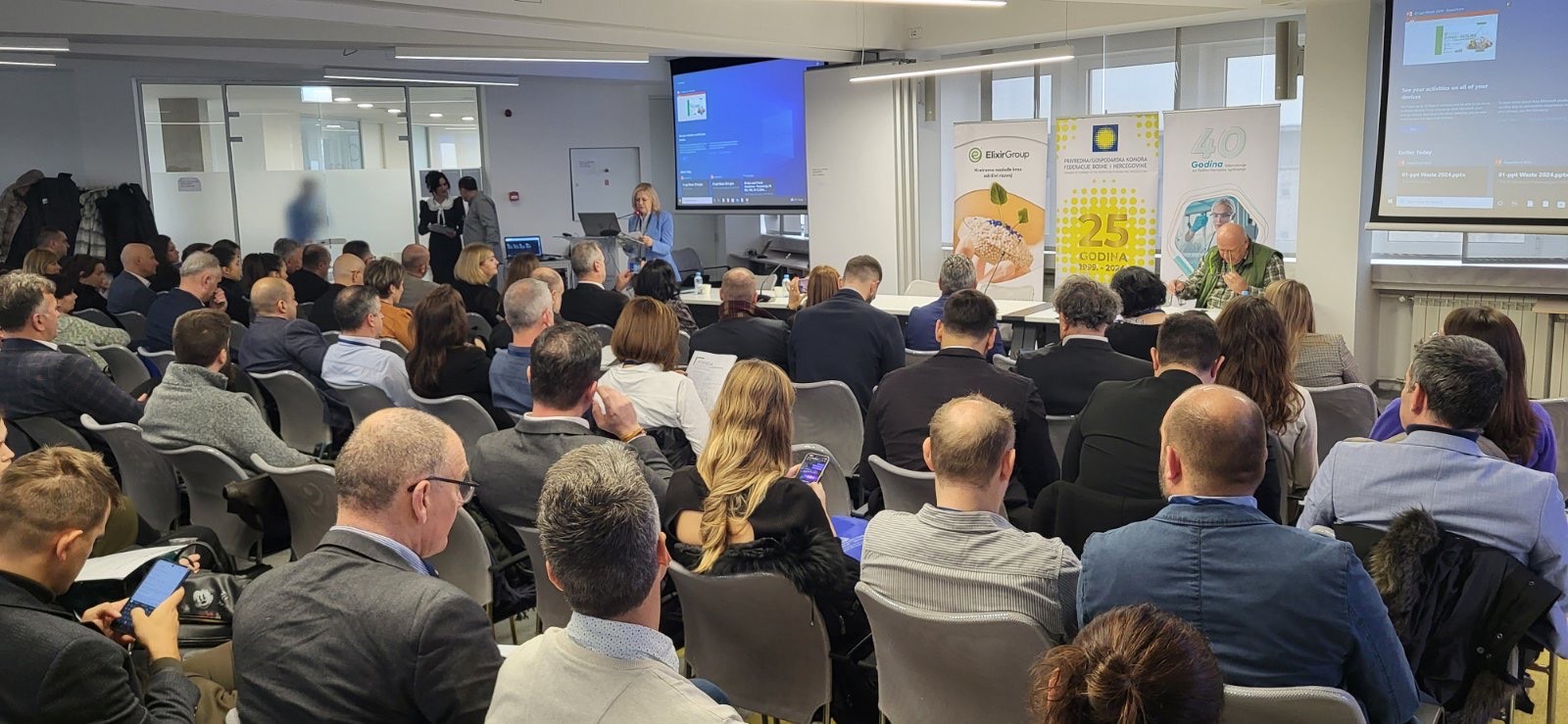
In Belgrade, on December 5, 2024, a conference titled “Waste – a Resource for the Development of Circular Economy” was held, bringing together more than 100 participants, including experts, decision-makers, representatives of the private sector, civil society, and international organizations. The conference aimed to promote the importance of the circular economy as a sustainable development model that contributes to resource conservation, pollution reduction, and economic growth.
The event was organized by the Chamber of Economy of the Federation of BiH, with the support of partners the Chamber of Economy of Serbia, BioHub, as well as the General Patron Cementara Lafarge. The conference was also supported by sponsors Elxir Group and Land Friend.
During the event, participants discussed the key challenges and opportunities brought by the transition from a linear to a circular economy, especially in the field of waste management. The importance of efficient recycling and reuse of materials, as well as the role of innovation and new technologies in this process, was highlighted.
Special attention was devoted to the cement industry, which plays a key role in the transition to a circular economy. As one of the largest consumers of raw materials, the cement industry has enormous potential for recycling and reusing waste, thereby significantly reducing its environmental impact. The use of secondary raw materials, such as recycled concrete and industrial waste, can contribute to reducing CO2 emissions, making the cement industry an important partner in achieving sustainable development goals.
The second part of the conference was dedicated to practical examples from the country and abroad, showing how the concept of the circular economy is already being successfully applied in various industries. Participants had the opportunity to learn about successful projects in waste management that lead to resource savings, reduced CO2 emissions, and the creation of new jobs.
Within the conference, regulatory frameworks, legislative initiatives, and necessary reforms were also discussed in order to improve the application of the circular economy in the region. Special attention was given to the role of education and raising awareness among citizens, in order to achieve broader social change in the approach to waste and resources.
Through panel discussions and presentations, participants agreed that the future development of the circular economy requires cross-sectoral linking and joint cooperation between the public and private sectors, as well as the role of international organizations in supporting the implementation of global sustainable development goals.
The conference organizers, together with all participants, expressed their commitment to further work on creating a better environment for the application of the circular economy in the region, with an emphasis on practical application and long-term benefits for society and the economy.