
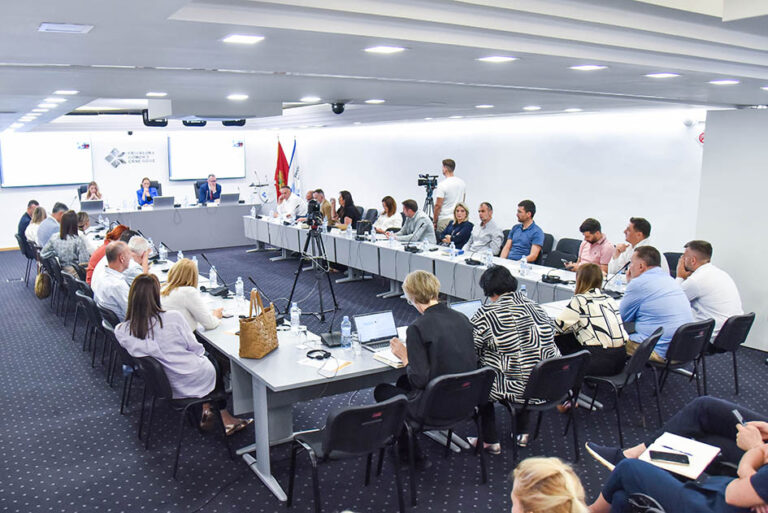
Strengthening the role of chambers of commerce through public powers is key to a more stable and predictable business environment, but this process must be accompanied by institutional trust and continuous capacity building, it was said at the regional round table “Public Powers of Chambers of Commerce” organized by the Chamber of Economy of Montenegro within its presidency of the Association of Balkan Chambers of Commerce.
The aim was to exchange experiences and good practices in the area of public powers entrusted to chambers of commerce by state institutions, as well as to identify common challenges and opportunities for improving the role of chambers in the modern business environment.
“Public powers represent specific competencies that chambers of commerce exercise on behalf of the state, but also in the interest of business entities. They are a confirmation of the trust that society has in chambers as institutions that are not only a service to entrepreneurs, but also a partner to state bodies in carrying out certain administrative and regulatory functions. Such a role of chambers requires a high level of responsibility, transparency and expertise – said Drakić.
Irena Vućić Popović, Deputy Secretary General of the Government of Montenegro, pointed out that chambers of commerce, as institutions with a long tradition, not only in our country, represent a bridge between public administration and the business community.
“The role of chambers of commerce is not only consultative and representative – but also functional, especially when we talk about the public powers entrusted to them with the aim of more efficient functioning of the market economy. In this way, the system becomes more agile, more professional and closer to the real needs of the market.– said Vućić Popović.
The representative of the Croatian Chamber of Economy, Marina Rožić, emphasized the importance of public powers as a bridge between companies – Chamber members – and state institutions, stressing that these powers enable more efficient action in the interest of the business community.
“Public powers represent one third of all our services. These are specific competencies that enable direct support to the economy, but also ensure compliance with legislation and EU standards – said Rožić.
Prof. Dr. Sc. Marko Šantić, President of the Chamber of Commerce of the Federation of BiH, emphasized the need to strengthen institutional trust.
“Chambers should be enabled to operationalize the procedures entrusted to them, while the state would retain the role of supervision and monitoring. In particular, highlighting real estate transactions and the new law by which the Chamber was given the authority to conduct professional exams for real estate agents, I want to point out that the Chamber also maintains the Register of Agents, in which over 500 agents have been entered so far”.
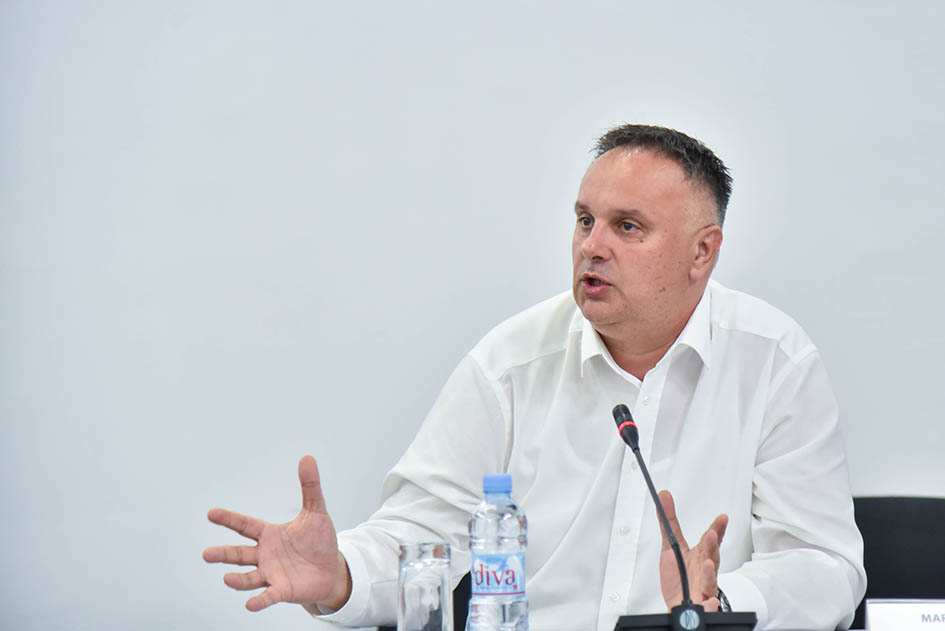
President Šantić also pointed out the importance of continuous education of members of management and supervisory boards in companies with state capital, as a basis for responsible and professional management in these companies.
Mirko Bošković, Foreign Trade Chamber of BiH, spoke about concrete results, stating that more than 240,000 requests from business entities were processed in the previous year, with the rule that each request must be resolved within 48 hours.
“We are proud that we have established the practice of quickly resolving requests, which contributes to transparency and trust in the chamber system – Bošković emphasized.
Igor Tasevski, representative of the Chamber of Commerce of North Macedonia, spoke about the active role of the Chamber in promoting the domestic economy abroad and involving companies in international supply chains.
“The Chamber provides analytical and informational support to companies, participates in drafting laws and encourages export activity – all with the aim of strengthening the competitiveness of our economy – Tasevski said.
He also emphasized the modernization of the ATA carnet issuance procedure, which will remain in paper form until 2027, but additional security features and new software have already been introduced to make the system more reliable and efficient.
Mitar Bajčeta, Secretary General of the Chamber of Economy of Montenegro, emphasized the Chamber’s long-standing role as a partner of the Government in the implementation of public powers.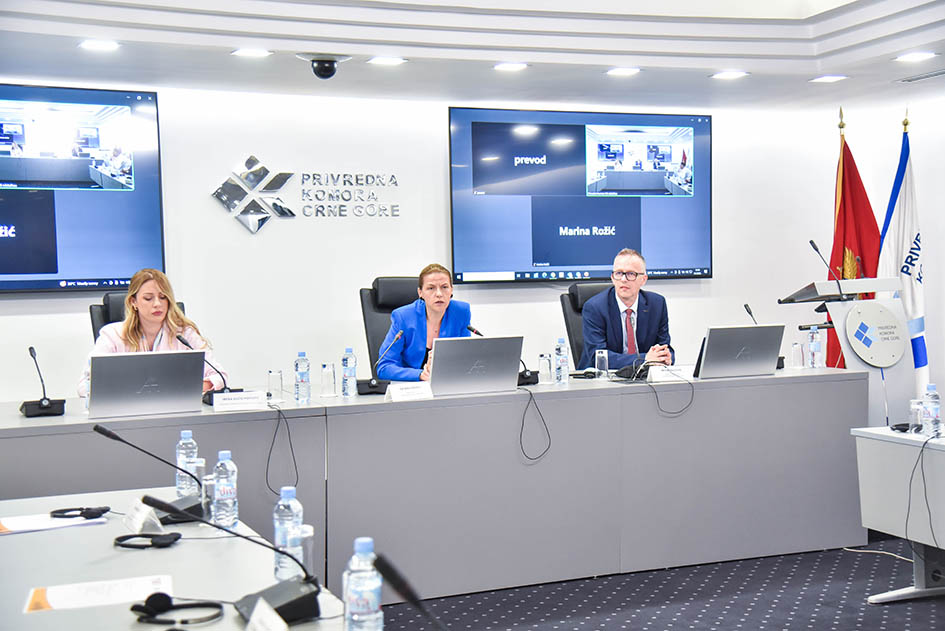
“Businesspeople often point out that it is easier for them to negotiate with state institutions through the Chamber than directly, precisely because through chamber dialogue we more easily arrive at solutions – said Bajčeta.
He particularly highlighted the ATA carnet, which the Chamber has been issuing since 2008, and announced the completion of the development of the digital E-chamber platform, which will speed up the processing of applications for various services. He also spoke about the important role of the Chamber in the transport sector, including participation in determining timetables, and the activities of the Center for Education in Road Transport, through which over 4,000 drivers have been trained.

