
The installed capacity of solar power plants in BiH doubled in just one
year, it was emphasized at the conference
“Renewable South”, held on 15 and 16.05. in Ljubuški.
In the south of Bosnia and Herzegovina, in Ljubuški, organized by the company Energetika Marketing, the conference titled “Renewable South” was held on 15 and
16.05.2024, dedicated to topics of renewable energy sources and the energy transition.
Visitors to the conference received detailed information about the state of the energy sector and the development plan
of the energy landscape in Bosnia and Herzegovina. It was also a successful connection between representatives
of state bodies and institutions, local authorities, the academic community and the economy, with the aim of discussing
problems but also opportunities in the field of energy that, thanks in part to the recent
opening of negotiations with the European Union, await our country.
After the welcome speech by Tihomir Kvesić, president of the City Council of Ljubuški,
interesting data could be heard. We highlight some of the statements.
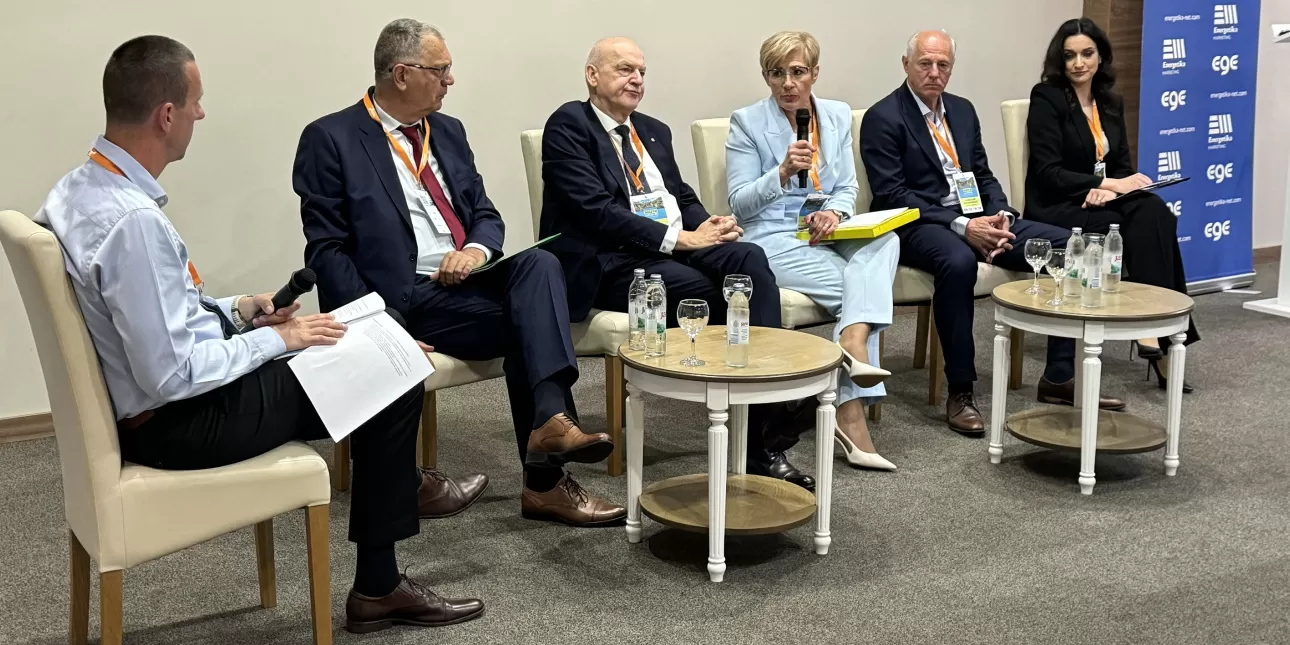
Halko Balavac, assistant minister in the Federal Ministry of Energy, Mining and Industry,
announced major steps forward in the renewable energy sector from the legislative side, such as
faster connection of solar power plants to the grid or even easier establishment of citizen communities.
This can also be seen from the data presented by Almir Imamović, head of the Tariffs and
Markets Sector of the State Electricity Regulatory Commission (DERK). The capacity of solar power plants
has doubled in one year and he believes that with an additional 2 GW from renewable sources Bosnia and
Herzegovina could be decarbonized.
That the energy transition is important was also confirmed by Sanela Pokrajčić, acting member of the Energy
Regulatory Commission in the Federation of BiH (FERK), who says that jobs in mines must not
remain closed, but must find their place under the Sun.
Lejla Sadiković from the Association for Renewable Energy Sources of the Chamber of Commerce
of the Federation of BiH noted that renewable sources in today’s energy sector, economy and society are
at the same time both a trend and a challenge.
The head of economic affairs in the Office of the General Director of Elektroprivreda HZHB, Dr.
Maria Đogić, believes that local communities should benefit more from any energy projects,
but that progress is still noticeable.
The round table titled Strengths, weaknesses, opportunities and threats of applying renewable sources brought
a great discussion, with more answers than (open) questions.
In the second part of the conference, interesting projects were presented and there was also talk about the possibilities
of using solar energy to obtain electrical, thermal and cooling energy.

